Boardible is a multiplayer board game platform, so it originally used 'UserTag' to link users in the same room. UserTag was a large pain point for users, so they gravitated toward familiar, industry-standard concepts like room codes and a ‘share’ feature. None of the users I interviewed could use the UserTag properly. Revising the user-to-user connection interface would be essential to increasing user conversion.


Timeline

May 2025

Skills + stack

prototyping on Figma

Background

Class project
Dating algos

Dating algos

Cultivating user understanding of Gale-Shapley

Powering AI-enhanced teaching and

learning in rural areas

Education as something fun and self-paced


ConnectEd is a nonprofit organization aiming to bridge the technology and education divide in rural communities in the Philippines. The goal is to ultimately provide high school and college students with access to quality education.

Convey basic technical knowledge


The organization aims to leverage existing Google Workspace tools and develop their own custom software. ConnectEd also struggles to maximize its marketing and customer acquisition strategies.

Reflect user needs and interests


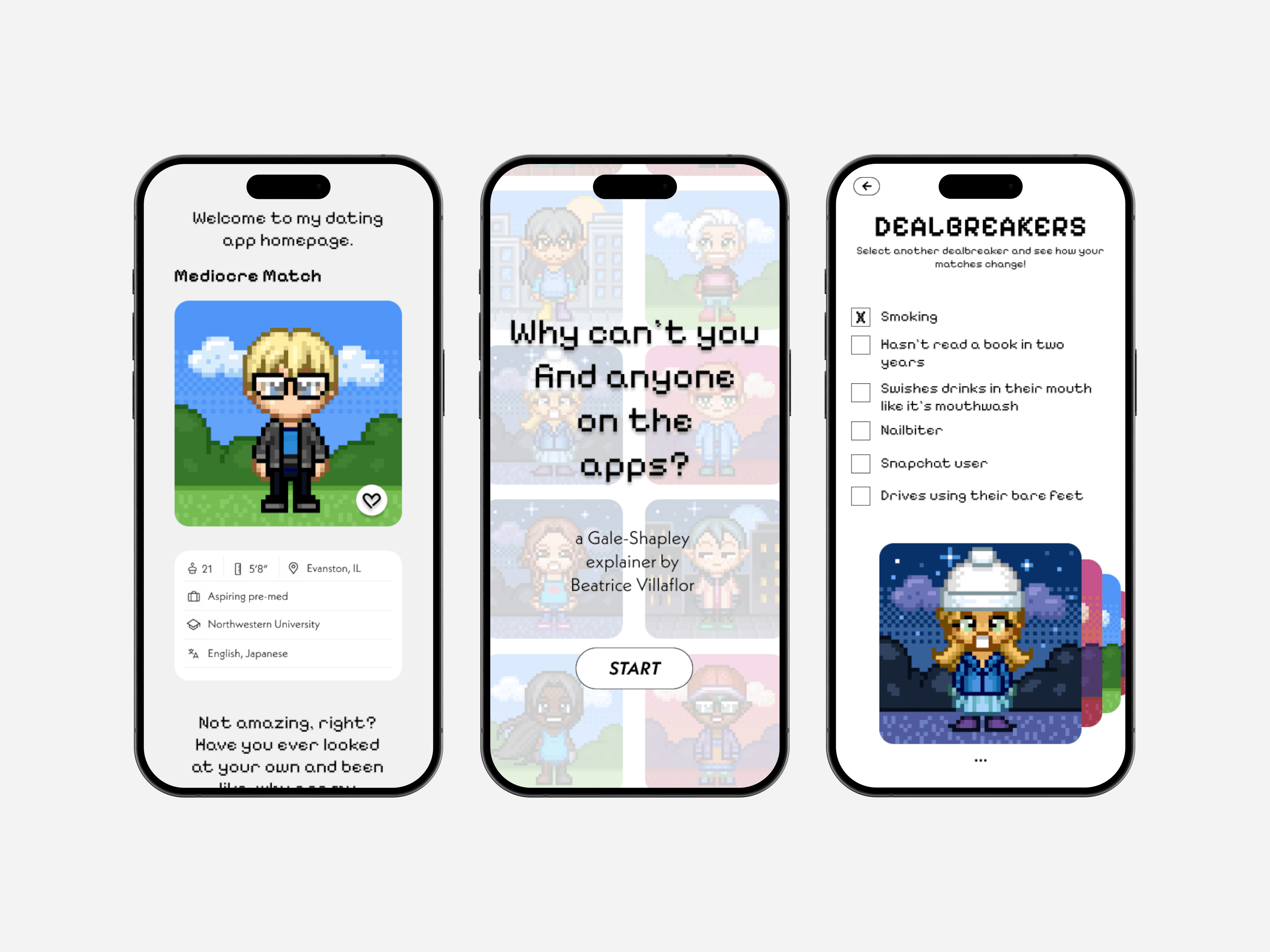
I wanted to design something that felt youthful and dynamic. This is where I landed on pixel art and the storytelling style of The Pudding.


To further the relevance to my audience, I conducted 5 user interviews. I ended up making 30 screens!

Design and intent

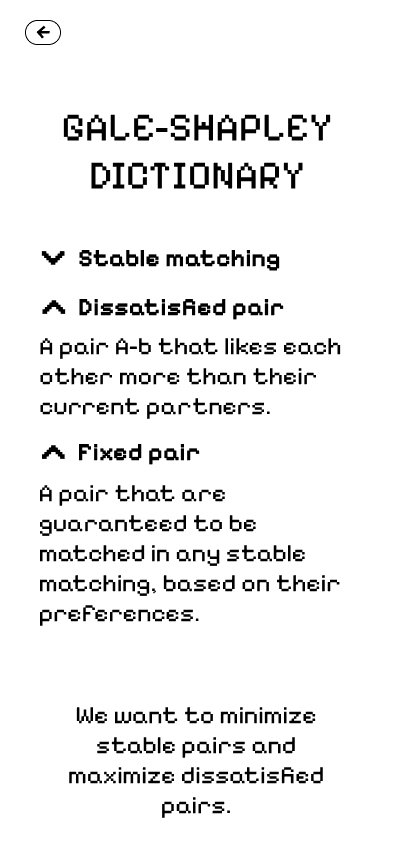
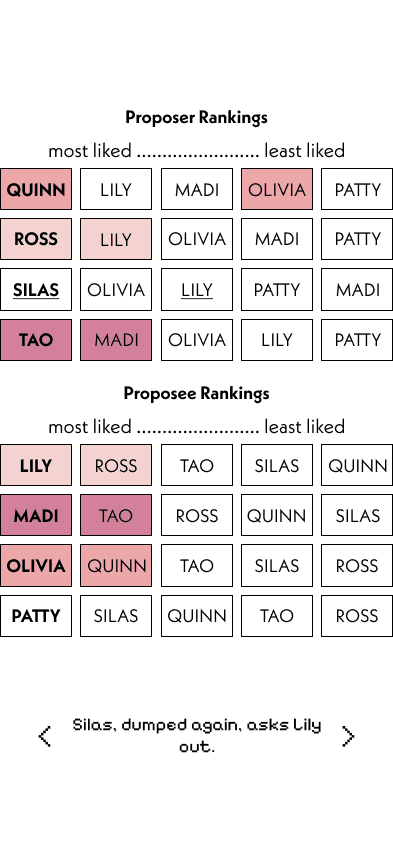
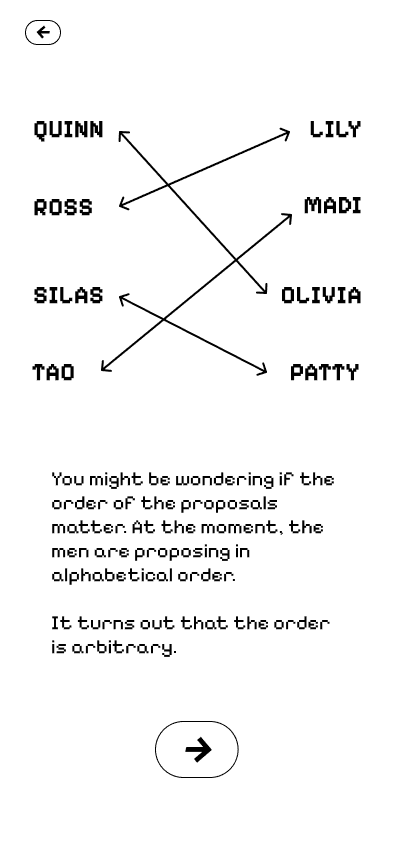
Wireframes and prototypes I worked on to produce a hi-fi prototype of an explainer for the Gale-Shapley Algorithm for college students, for Northwestern's Communicating Computer Science class.

My audience is non-technical dating app users of the ages 20-35 who are tech-curious and use technology often. My audience are stumblers upon this knowledge and stay intrigued by the project because of its relevance to their lives.

I chose this audience because though they are digitally literate, these users may lack the ability to understand existing resources about the algorithms behind these apps because of their non-technical background. Moreover, the topic was inspired by my friends, who fit this audience well.

When I designed, I used a more colloquial tone that builds from my experience interacting with these users. I also took inspiration from the graphics of data-driven publications like The Pudding, which shares a common user base with me. I also aimed to reduce the amount of information given on a single screen, and create various visualizations to explain the same thing.

Audience analysis

Audience analysis

My audience is non-technical dating app users of the ages 20-35 who are tech-curious and use technology often. My audience are stumblers upon this knowledge and stay intrigued by the project because of its relevance to their lives.


I chose this audience because though they are digitally literate, these users may lack the ability to understand existing resources about the algorithms behind these apps because of their non-technical background. Moreover, the topic was inspired by my friends, who fit this audience well.


When I designed, I used a more colloquial tone that builds from my experience interacting with these users. I also took inspiration from the graphics of data-driven publications like The Pudding, which shares a common user base with me. I also aimed to reduce the amount of information given on a single screen, and create various visualizations to explain the same thing.